

Gift Honoring U.P. Farmer Fuels Quest for Next-Generation Heart Valves
August 17, 2026
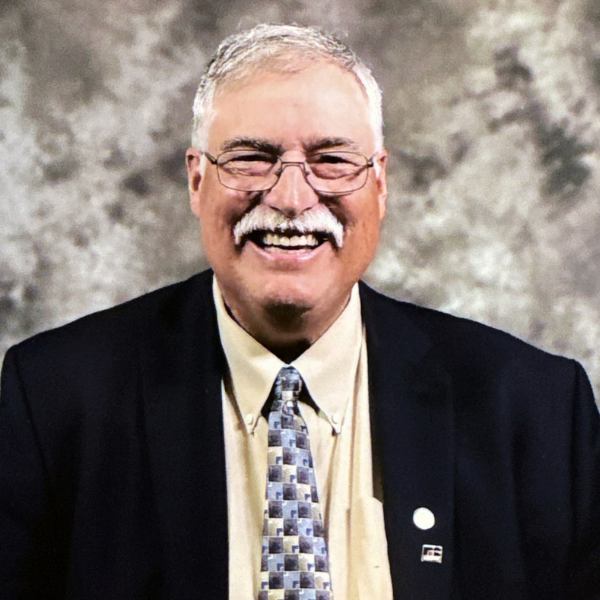 David Bahrman spent much of his life relying on replacement heart valves to survive. After six open-heart surgeries over nearly five decades, his legacy is helping fuel research aimed at ensuring future patients face fewer surgeries and better outcomes. Through a $100,000 gift and a commitment of half her estate, his wife, Karen, is investing in pioneering heart valve research at Michigan State University's Institute for Quantitative Health Science & Engineering.
A lifelong farmer, David was born with aortic stenosis. He first contracted endocarditis, inflammation of the inner lining of his heart valves and chambers, when he was 18. He underwent the first of what would be six open heart surgeries during his life to replace his aortic valve. His first three replacement valves were porcine. In 1989, he received his fourth replacement – a mechanical valve, which he was told would last forever. By 2005 that valve failed during another bout of endocarditis, and he needed another replacement.
Both mechanical and tissue valves have limited longevity. The quest for a tougher, infection‑resistant valve may hold the key to dethroning cardiovascular disease as the world’s number‑one killer.
“What we really need is not more great surgeons, but surgeons with better tools,” said Karen Bahrman.
Inside the lab of Aitor Aguirre, PhD, associate professor in the Department of Biomedical Engineering in MSU’s College of Human Medicine, they’re growing “organoids.” These tiny, three-dimensional structures function like miniature human hearts.
Many experimental therapies fail once they meet human trials because the lab models used to test them don’t fully replicate the human heart.
Aguirre’s organoids represent a major leap in physiological realism, because they closely mimic how real human heart tissue behaves.
“We apply an engineering perspective to biology,” Aguirre said. “Instead of mechanical parts, we work with biological ones. We are engineering the human heart in a dish.”
Aguirre envisions the future of heart organoid research enabling patient-specific heart tissue models genetically matched to an individual. His long-term goal is to create models of the human heart for research, therapy, and technology development opening up a new era of treatments for cardiovascular conditions.
At age 67, David did not survive his sixth open heart surgery.
Karen, his wife of 37 years, is profoundly grateful that medical advances and critical care repeatedly extended David's life, allowing him to overcome extraordinary health challenges for decades. Particularly renowned heart surgeon Kenton Zehr, MD, who not only cared for David but advocated for him twice, twenty years apart, at St. Mary’s Hospital in Rochester, MN, and later at Detroit Medical Center.
Her original intent was to endow a scholarship aimed at medical school graduates who aspire to be heart surgeons. When it came time to making a gift in honor of David, she realized the greatest impact she could make was to invest in advances in science. “I just kind of did a 180,” she said. “Where I want to be is research and development.”
Karen met with Aguirre and Christopher Contag, PhD, inaugural James and Kathleen Cornelius Endowed Chair and founding director of the Institute for Quantitative Health Science and Engineering (IQ), to learn more about their work. She said their enthusiasm was contagious.
“I think there is really good agreement that tissue engineered heart valves using the patient's own cells are the future of valve replacement. I want to be on the ground floor of this.”
Karen's gift helps advance the next generation of heart valves, building on decades of progress in cardiac care that sustained David throughout his life and moving researchers closer to a future where fewer families experience the loss and hardship caused by heart disease.
A lifelong farmer and proud Yooper, David served as a regional director for the Michigan Farm Bureau. He was inducted into the Michigan Farmer’s Hall of Fame in 2024. View Mr. Bahrman’s full biography here or donate to this program.