

Helping Future Doctors Care for Communities
December 19, 2025
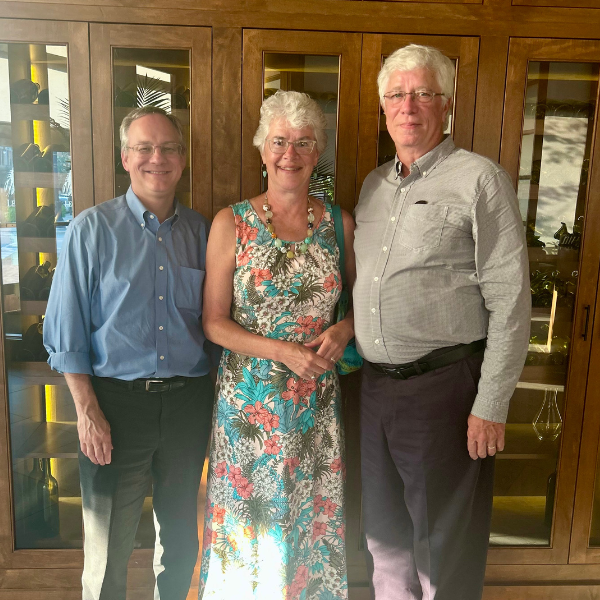 Retired Michigan State University faculty member Dr. Sandra “Sandy” Cottingham and her husband Steven Cline have just made an incredible impact on the College of Human Medicine at MSU.
With their gift of $1 million, they have created a first-of-its-kind endowed scholarship that will support aspiring physicians, for generations to come, who are specifically focused on providing medical care to members of Indigenous communities.
“The impact of an endowed scholarship gift of this size cannot be overstated,” says MSU President Kevin M. Guskiewicz, Ph.D. “Thanks to Sandy and Steve, future Spartan doctors—more with each passing year—will be empowered and supported as they pursue their dreams of providing exemplary medical care to communities across Michigan and beyond.”
Dr. Sandy Cottingham’s career as a practicing pathologist and researcher specializing in neuropathology at Spectrum Health, and her concurrent career as a faculty member in the College of Human Medicine, kept her calendar—and her heart—very full.
“Being medical director of a big lab was really exciting,” Sandy says. “But as a teacher, what I really loved was following the trajectory of the students I was able to build relationships with through small group mentorship. It’s stressful being in medical school, and I loved being able to check in with my students and help keep them going. Getting to know them kept me going.”
It also gave Sandy a pretty good idea of what kind of support students—and the college—might need for the future. Which is why she and Steve chose to have their scholarship support medical students who are committed to serving Indigenous communities.
“Medical students across the nation are graduating with enough educational debt that it impacts workforce decisions,” says Dr. Andrea Wendling, M.D., the senior associate dean for academic affairs and director of the Rural Medicine Program in the College of Human Medicine. “These students factor in debt when they decide what specialty to pursue, where to practice, and how they can serve a community while balancing their own needs.”
Dr. Wendling adds, “Scholarships open opportunities. Students can follow their passion to care for a community in the way that they can make the most impact and can make this decision with confidence. It improves their morale and wellbeing and allows them to focus—early in their education—on the skills they need to accomplish these goals.”
"The impact on the student, and on the community they will eventually care for, is invaluable."
Dr. Andrea Wendling
There is an ever-growing effort on the part of the College of Human Medicine to build stronger connections with the 12 federally recognized Indigenous tribes that have called Michigan home for centuries. Scholarships that provide financial support for students with community-focused medicine in mind are just one piece of the effort.
The Indigenous Pathways Program is another. Fewer than 1% of Michigan’s 44,000 doctors are Indigenous, so there is, of course, a need to increase representation of Indigenous students in the medical field.
But there is also a need for more doctors who have a deep understanding of the cultural and traditional nuances of caring for members of Indigenous communities.
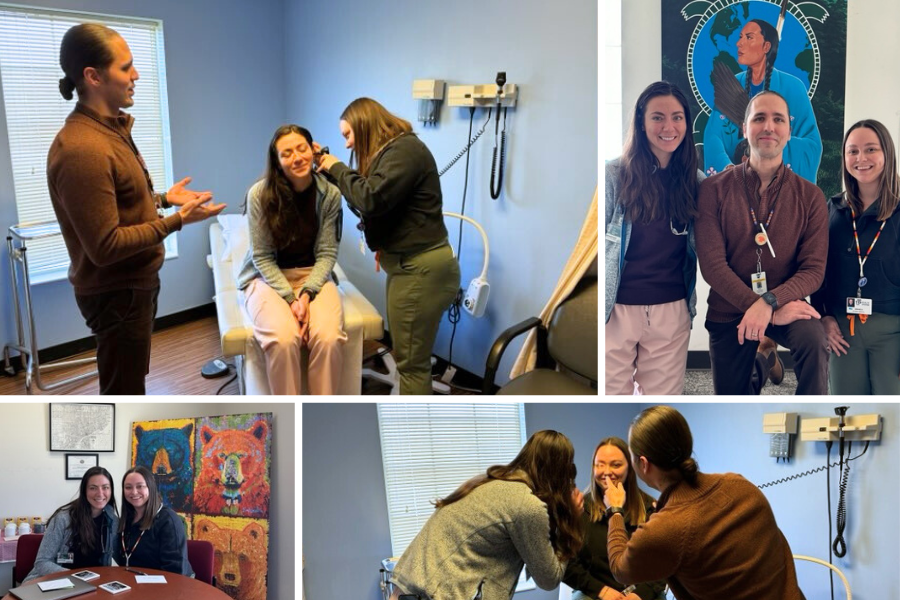
By offering medical students the opportunity for experiential learning in Indigenous communities, under the mentorship of physicians like CHM alum Dr. Frank Animikwam—a tribal citizen himself and medical director for the Little Traverse Bay Bands of Odawa Indians—the Indigenous pathways program does both.
“Weaving experiences like [working with Dr. Animikwam] through a student’s clinical training supports their career decisions, and also prepares them to holistically care for their future community,” says Dr. Andrea Wendling.
Which ties back to the entire ethos of Sandy Cottingham and Steve Cline’s gift.
The scholarship is named in honor of a Native American symbol: the medicine wheel, which is most often depicted as a circle divided into quadrants, each representing various guiding principles that help individuals or communities create a carefully balanced life.
Though the medicine wheel means different things and has different cultural and spiritual significance for every individual or tribe, for Sandy, including this symbol in the name of her scholarship is her way of paying tribute to what inspired her gift in the first place: a piece of land in her home state of Indiana.
Sandy and her brother inherited the land from their father and aunt, who had purchased it years earlier with money from Sandy’s great-grandfather, who made his living as a banker in the town of Noblesville, Indiana. The town was a hotbed of Ku Klux Klan activity in the 1920s, which made Sandy wonder about the circumstances around her family’s generational wealth. It also made her wonder about the original owners of the land itself.
To Sandy, the land—and the family money that bought it—represents a type of privilege that should be reversed.
“This land was likely stolen from Native Americans at some point,” Sandy says. “And I acknowledge that a lot of where I am today is the result of generations of privilege that may not have been available to people who weren’t white men. So this gift, to me, is very much about reparations.”
A perfect opportunity, she says, to create opportunity for others.
For more information on supporting future Spartan MDs, contact the College of Human Medicine Office of Advancement at chmdevelopment@msu.edu.