

Dean's Office
- About the Dean
- College Town Hall
- Strategic Plan
College Partnerships
- Corewell Health
- Henry Ford Health
Stay Connected
- Social Media
- News
- College Newsletter
- Events
- College Store
Dean's Office
- About the Dean
- College Town Hall
- Strategic Plan
College Partnerships
- Corewell Health
- Henry Ford Health
Stay Connected
- Social Media
- News
- College Newsletter
- Events
- College Store
Admissions
- Admissions Overview
Certificate Programs
- Leadership in Rural Medicine
- Leadership in Community and Public Health
Student Admissions Information
- The Casper Test
- AAMC PREview™ Exam
- Office of Student Affairs & Services
- Financial Aid & Scholarships
- Contact Us
Admissions
- Admissions Overview
Certificate Programs
- Leadership in Rural Medicine
- Leadership in Community and Public Health
Student Admissions Information
- The Casper Test
- AAMC PREview™ Exam
- Office of Student Affairs & Services
- Financial Aid & Scholarships
- Contact Us
Department of Epidemiology and Biostatistics
- About
- Research
- Degree Programs
- Epidemiology
- Biostatistics
Charles Stewart Mott Department of Public Health
- About
- Research
- Degree Programs
- Master of Public Health
- Graduate Certificates
Department of Epidemiology and Biostatistics
- About
- Research
- Degree Programs
- Epidemiology
- Biostatistics
Charles Stewart Mott Department of Public Health
- About
- Research
- Degree Programs
- Master of Public Health
- Graduate Certificates
Leaders in Research
- Research Impact
- Published Research
- Grants
- Featured Research Story
For Our Researchers
- College of Human Medicine Office of Research
- Health Colleges Research Services
- MSU Office of Research and Innovation
Research Innovation
- Innovation Park
- Institute for Quantitative Health Science & Engineering
Leaders in Research
- Research Impact
- Published Research
- Grants
- Featured Research Story
For Our Researchers
- College of Human Medicine Office of Research
- Health Colleges Research Services
- MSU Office of Research and Innovation
Research Innovation
- Innovation Park
- Institute for Quantitative Health Science & Engineering
Our Partnership with Henry Ford Health
Under President Guskiewicz’s leadership, the university has undertaken an historic partnership with Henry Ford Health to develop an integrated, nationally preeminent academic health enterprise. This effort has the potential to reimagine the university’s role in providing health care to our communities and greatly increase population health and biomedical research opportunities. The college is proud to support this effort and have highlighted key components to our work with HFH colleagues.
New Departments
With support from President Guskiewicz, the Provost, and university and college academic governance committees, the college developed seven new departments in recognition of the exceptional opportunities afforded through the HFH partnership. These statewide departments are led by experienced HFH chairs and boast nationally recognized physicians and researchers. Founding chairs for each department are listed below:
Anesthesia
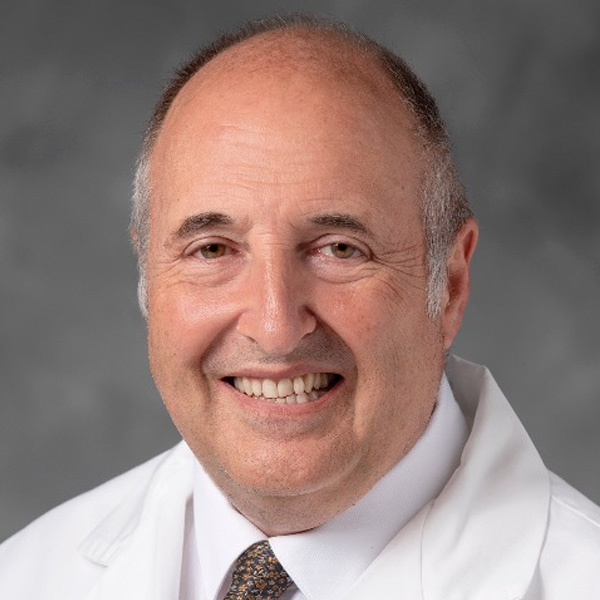
Michael Lewis, MD
Dermatology
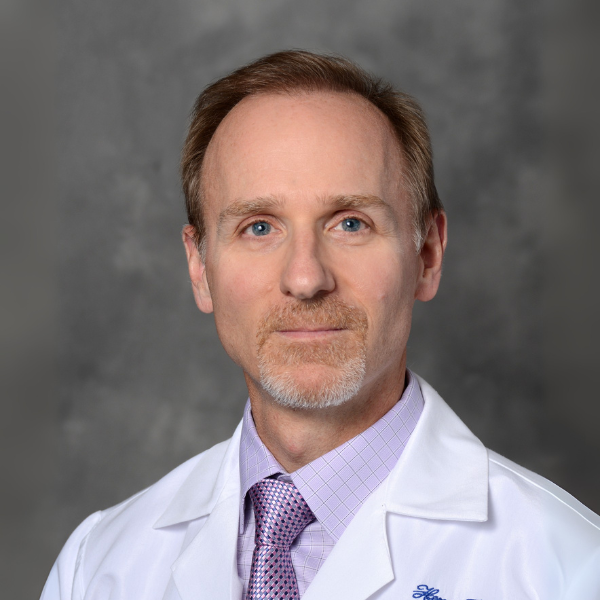
David Ozog, MD
Neurosurgery
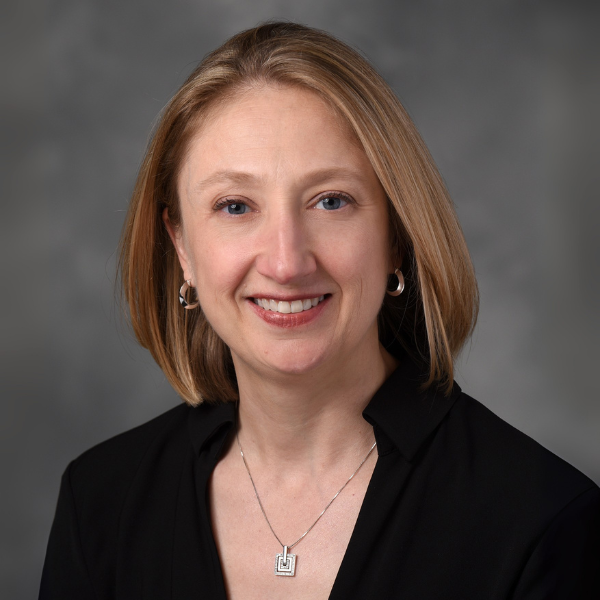
Ellen Air, MD, PhD
Otolaryngology
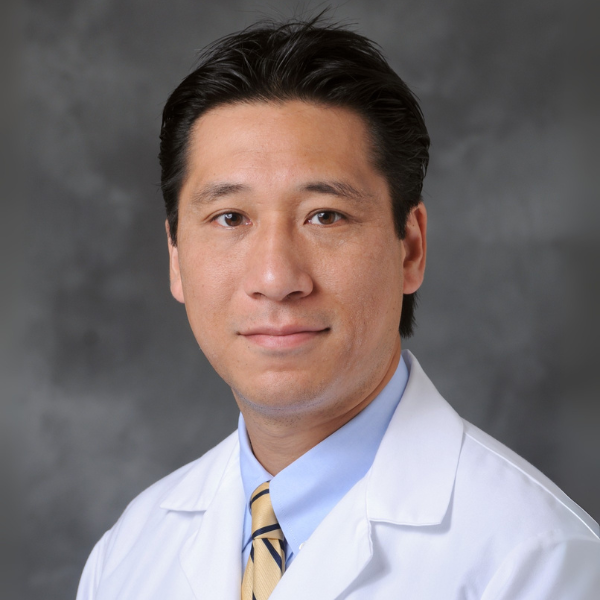
Steven Chang, MD
Pathology
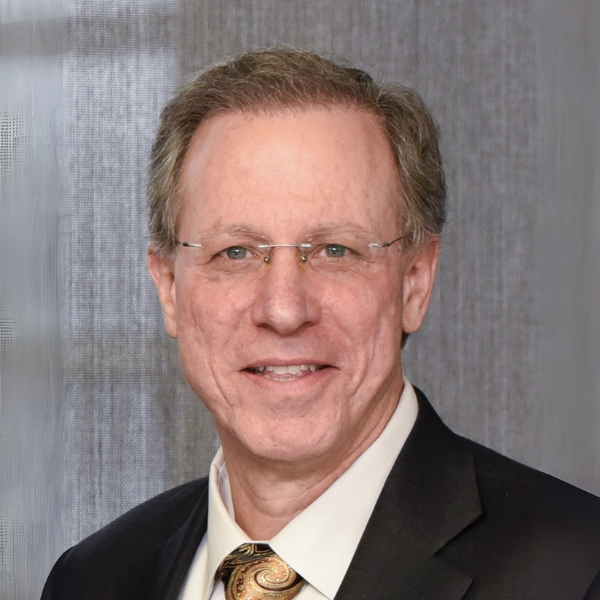
Richard Zarbo, MD
Radiation Oncology
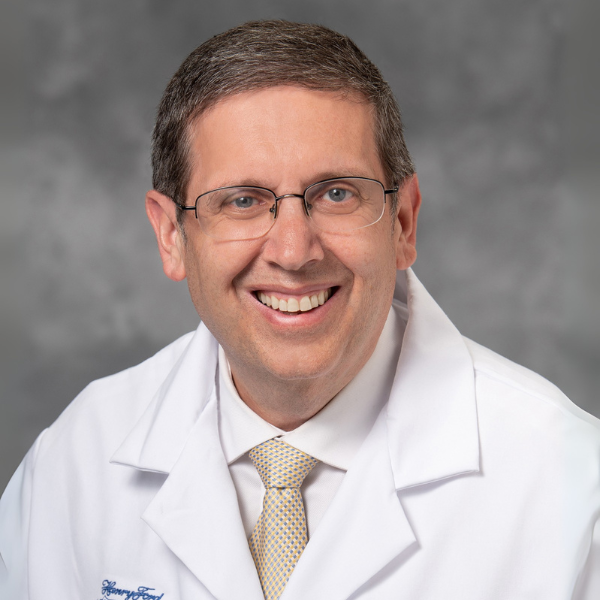
Benjamin Movsas, MD
Urology
Craig Rogers, MD
Clinical Integration
In partnership with the clinical departments, Supratik Rayamjhi,MD, interim dean, and Brad Kline, CFO, have worked collaboratively with the Office of Health Sciences and Health Care, Inc (HCI) to support integration of the health care practices with the Henry Ford Health clinical network. The integration positions the university for strategic growth and sustainability critical during this time of market uncertainties and aligns the university’s primarily ambulatory efforts with a health plan (HAP), HFH hospitals, and a robust physician network. The driving forces for the integration effort include the following:
- Improve patient care
- Drive innovation and accelerate new care models
- Increase access to care
- Address health equity
- Enable strong recruitment
- Realize synergies to optimize practice administration
- Advance education and research missions
Supratik Rayamjhi, MD, interim dean, serves on the HFH+MSU partnership’s clinical integration joint operating committee.
More information is available on the Henry Ford Health + MSU partnership website.
Cancer Institute
Ben Movsas, MD, chair of the Department of Radiation Oncology, and Jeff MacKeigan, PhD, professor in the Department of Pediatrics and Human Development and senior fellow in the Office of Research and Innovation (ORI), co-chair the HFH+MSU partnership cancer committee. Jamie Bernard, PhD, associate professor in the Department of Pharmacology and Toxicology, and Thomas O’Halloran, PhD, Director of Elemental Health Institute, serve as members of the committee. The committee works together to recruit key cancer investigators, grow National Cancer Institute (NCI) funded research and support efforts to develop an NCI-designated Cancer Center.
More information is available on the Henry Ford Health + MSU partnership website.
Research Initiatives
Nara Parameswaran, PhD, senior associate dean for research, serves as college representative on the HFH+MSU partnership research committee. Walt Esselman, currently the Office of Health Sciences’ assistant vice president for research and formerly the senior associate dean for research, is a member of the committee. The committee’s focus is on joint recruitment of research faculty, advising the Research Center development, and facilitating collaborative research efforts between HFH and MSU.
Chris Contag, PhD, director of the Institute for Quantitative Health (IQ), is the vice-chair of the Innovation Committee. Anna Moore, PhD,associate dean for research development and director of the Precision Health Program, and Mark Delano, MD, chair of the Department of Radiology, are members of the committee. The committee’s efforts focus on improving connectivity and creating new partnerships across HFH and MSU.
More information is available on the Henry Ford Health + MSU partnership website.
Education Initiatives
Supratik Rayamjhi, MD, interim dean, and Andrea Wendling, MD, senior associate dean for academic affairs, serve on the HFH+MSU partnership education committee. The committee is working to create a joint vision for MSU medical and nursing education at HFH, expand dual degree opportunities (MD/PhD, DO/PhD, RN/PhD, RN/DNP), and support current training opportunities with the goal of increased retention to the HFH workforce.
Oral & Maxillofacial Surgery (OMFS) Program
The college collaborated with the Henry Ford Medical Group to create an Oral Maxillary Facial Surgery Program. The OMFS program places dentists into year 2 of the MD educational program allowing these students to complete their MD degrees and required residency training for the specialization of their DDS degree in six years. The aims of the program are to increase the state’s workforce and reduce the burden of educational debt by accelerating the training process. In 2024, the college’s curriculum committee approved changes in the college’s promotion and placement criteria, created a bootcamp for the students, developed new curricular materials and implemented a management structure. The first students were admitted for fall 2025.
Detroit Campus
As a community-based medical school, MSU’s College of Human Medicine has structures in place to manage the academic mission across eight communities throughout the state. That structure includes campuses which are led by a community assistant dean and a student programs administrator. These campuses also have several staff who do the challenging work of scheduling students, overseeing their completion of degree requirements, managing regional faculty, monitoring evaluations, and providing student support and services. These campuses are critical pieces of the College of Human Medicine’s infrastructure and are highly valued partners. The community campus teams are responsible for the 3rd and 4th year student experiences.
As part of the work to support the MSU+HFH partnership, the college established a campus in Detroit at Henry Ford Health main hospital in 2020 with approximately 50 third- and fourth-year students. The leadership team includes Nakia Allen, MD, community assistant dean and HFH’s director for undergraduate medical education, and Anastasia Mortimore, student programs administrator and HFH’s administrative director for undergraduate medical education.
Faculty appointments
The college’s human resources office under the direction of Carol Parker, PhD, associate dean for administration, has partnered with HFH leadership, Eric Scher, HFH chief education officer, to provide the exceptional HFH-employed physicians and researchers the opportunity to apply for MSU faculty appointments. To date, the college has awarded 644 appointments:
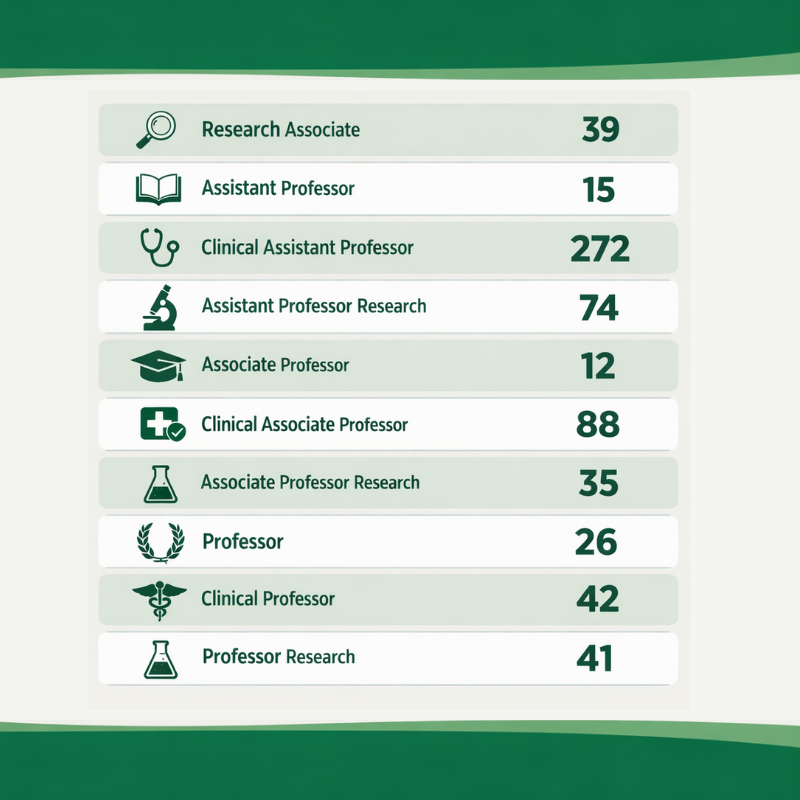
Image Alt text: Infographic showing appointment breakdown chart, displaying: 39 Research associates, 15 Assistant professors, 272 Clinical assistant professors, 74 Assistant professor researchers, 12 Associate professors, 88 Clinical associate professors, 35 Associate professor researchers, 26 Professors, 42 Clinical professors, 41 Professor researchers
Electronic applications for HFH appointments will be launched in 2026.
External Relations
The College of Human Medicine's External Relations team led by Rosalynn Bliss, assistant dean, supports advancing the MSU+HFH partnership by strengthening relationships and overseeing the fulfillment of commitments outlined in the Community Benefits Agreement. Arlynn Dailey, our Community Engagement and Outreach Administrator, leads the day-to-day execution of Community Benefits Agreement commitments, serving as a primary liaison to community partners, establishing new relationships, and nurturing existing partnerships to ensure our institutional obligations translate into tangible, community-driven outcomes. At the same time, our communications team, led by Amy Nienhouse, senior communications and marketing officer, works to amplify the important milestones, research progress and educational opportunities emerging from the partnership, helping the public understand the value and impact of our joint work. Together, these efforts support the college's mission and help the partnership thrive.
X
![]()
X
![]()