

How a $3.7M NCI Investment Aims to Tackle Alcohol Consumption and Cancer Risk
October 14, 2026
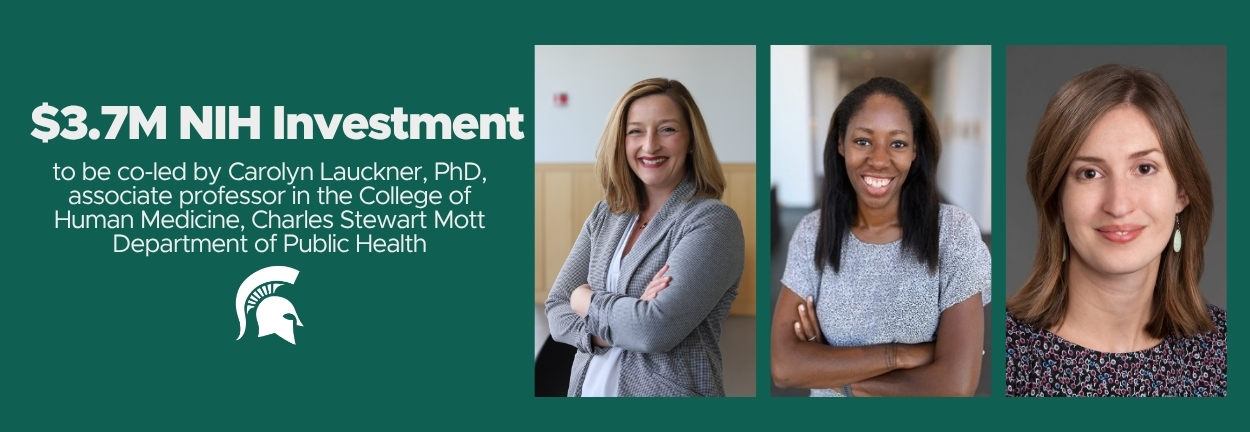
Michigan State is researching ways to reduce alcohol misuse for cancer survivors. Carolyn Lauckner, PhD, associate professor in the College of Human Medicine, Charles Stewart Mott Department of Public Health, is a co-principal investigator on two National Cancer Institute grants to prevent alcohol misuse among cancer survivors. One, led by Lauckner and co-PI Dr. Laurie McLouth from the University of Kentucky, is a three-year $877,000 grant for adolescent and young adult survivors. The second, also led by Lauckner and McLouth and including Dr. Jessica Burris from the University of Kentucky, is a $2.8 million grant over five years for adult head, neck, and esophageal cancer survivors.
Why this matters:
- Young people are more likely to misuse alcohol, and cancer survivors are already vulnerable because of mental health challenges, fear of recurrence, and other variables.
- Alcohol use among survivors can contribute to poorer cancer survival, higher risk of cancer recurrence or development of new cancers, and reduce overall health-related quality of life.
- Oncologists often lack the resources or training to support patients with alcohol misuse.
Digital Alcohol Reduction for Adolescent and Young Adult Cancer Survivors
This grant for survivors diagnosed at ages 15-35 builds on a previous alcohol reduction intervention that included daily self-monitoring and four weekly phone counseling sessions. Although the intervention yielded promising results, oncologists said it wasn’t feasible for a Cancer Center to offer, so this grant shifts to a digital intervention.
“This demographic hasn’t received as much attention in research because they represent a smaller group,” Lauckner says. “But cancer is a traumatic event for them during a formative moment in life. It can disrupt areas in life such as education, family planning, and employment. They can also have long-term side effects from cancer and treatment. For many survivors, ‘scanxiety’ can be experienced when they worry about whether a follow-up appointment will reveal their cancer has returned.”
The goals of this work are to reduce alcohol misuse by:
- Developing an online health promotion program called Tracking and Reducing Alcohol Consumption in Adolescent and Young Adult Cancer Survivors, which will provide a convenient option for patients and Cancer Centers.
- Programming 15–30-minute virtual modules that focus on developing goals for cutting down on alcohol intake, identifying important triggers for alcohol, and regularly monitoring alcohol use.
- Conducting a pilot optimization trial to identify the combination of modules that leads to the strongest effect on alcohol misuse.
Referral to Treatment for Hazardous Alcohol Use in Routine Cancer Care
The second grant is for people diagnosed with head, neck, and esophageal cancer who are attending appointments at Markey Cancer Center. The study will provide a screener at check-in to detect possible alcohol misuse. Because alcohol is the third leading preventable cause of cancer and can increase the risk of recurrence or new cancers among survivors, this grant addresses alcohol use as part of comprehensive cancer care.
“MI-TRACS (Multilevel Intervention to Track and Reduce Alcohol Consumption Among Survivors) will deliver a three-question questionnaire to establish alcohol use and possible misuse,” she says. “The screener will create a score and may give personalized feedback, encourage cutting back on drinking, and refer patients to psychological services or addiction medicine clinics. This way it can catch a problem before it becomes alcohol misuse or help stop it from getting worse and offer solutions. This lets an oncologist help when maybe they would have no way of knowing there was a problem.”
MI-TRACS provides clinician decision-support tools that integrate with the electronic health record. It also trains clinicians to facilitate treatment uptake and share knowledge about how alcohol affects cancer risk.
The goals of this work are to reduce alcohol misuse by:
- Making screening a straightforward part of cancer-related appointment check-in.
- Linking screening to the medical record so the oncologist can more readily see the possible issue.
- Making patients more mindful of alcohol misuse by tying the screener to every appointment.
“We want to put more power in both the patients' and providers’ hands,” she says. “Both can have a difficult time noticing an alcohol misuse problem. MI-TRACS can help identify the problem and offer solutions.”
“Research reported in this publication was supported by the National Cancer Institute of the National Institutes of Health under Award Numbers R34CA318298 and R01CA308383. The content is solely the responsibility of the authors and does not necessarily represent the official views of the National Institutes of Health.
By Eric Butterman and Jill Vondrasek