A Path to Medicine Shaped by People, Places, and Purpose
May 21, 2026
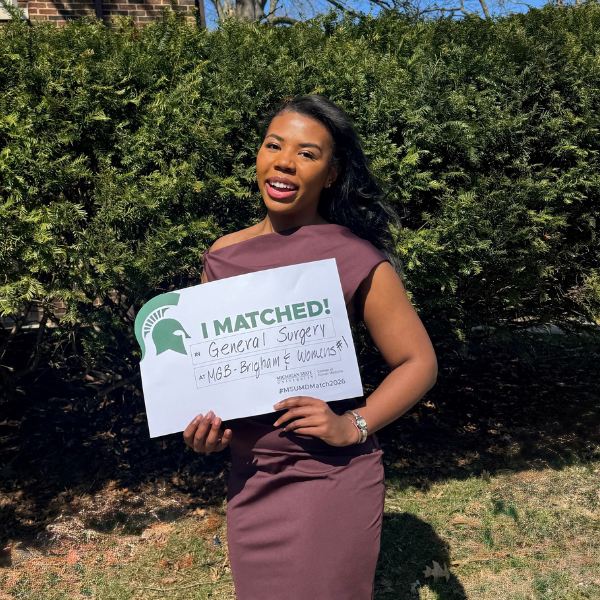 For Surya Adams, the path to medical school was shaped less by a single decision and more by a series of experiences that took her across continents, through classrooms and clinics, and into moments that gradually led her toward medicine.
Before medical school, Surya imagined how she wanted to make an impact in the world. She considered careers in public health and health policy, learned new languages, and moved to the island of Martinique to teach English through a fellowship program.
One of the most formative moments came at home, when her grandmother suffered a stroke. Surya helped care for her alongside her mother, witnessing both the strength recovery requires and the way illness ripples through an entire family.
“I saw how dependent we all are on systems of care, and how much it matters when someone is present and compassionate,” she said.  In the years that followed, Adams worked at the University of Chicago Medical Center as a clinical research coordinator. “That’s when I started to understand the role a physician has in improving the quality of life for their patients, both through direct care and through advocacy,” she said.
She began medical school at the Michigan State University College of Human Medicine carrying that perspective forward.
After her first two years, Surya took a gap year to pursue a master’s degree in medical anthropology at Harvard University. She did her thesis research in rural Rwanda, where her work focused on surgical disparities and what happens when patients delay care.
“Living there showed me how geography, economics, and infrastructure determine who gets life-changing care and who doesn’t,” she said.
When she returned to medical school, Adams continued her training and completed clinical clerkships at the Detroit campus. With family roots in the city, being there felt grounding while also exposing her to the realities many patients face every day. 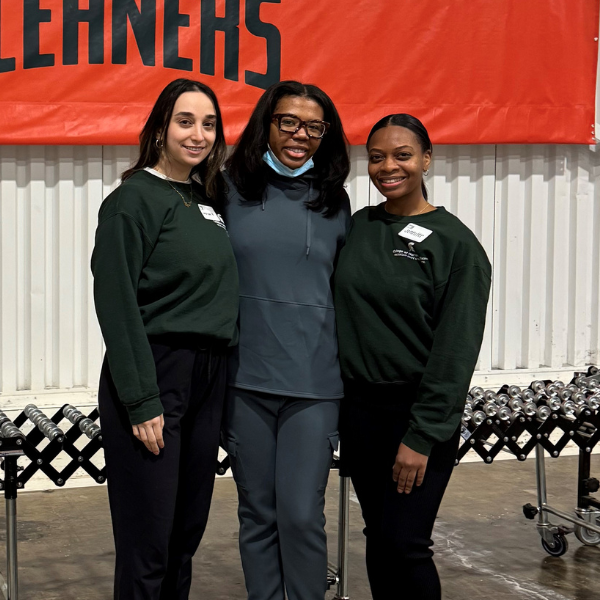 At student-run clinics and through work with Gleaners Community Food Bank, Surya saw how deeply health is tied to transportation, food access, and economic stability.
“The community forced me to confront healthcare realities in a way that you can’t grasp in a classroom,” she said.
Altogether, Surya’s experiences shaped her journey to medicine through listening to patients, caring for her grandmother, witnessing injustice, and recognizing she could act on what she saw.
She will continue that path in her residency in general surgery at Brigham and Women's Hospital, where she will join a global surgery track aligned with her interests in surgical disparities and health systems research.
“You can take someone who’s been suffering and give them back their mobility, their independence, their future,” she said.
But just as important as technical training is what comes next.
Adams hopes to continue studying disparities in surgical care and to encourage students who may not always see themselves reflected in medicine.
“I want students of color, women, and people who feel like they don't fit the traditional mold of a doctor to know that there's room for you in medicine,” she said. “You don't have to shrink yourself or your values to belong. Your identity and experiences are gifts that you bring to medicine and will ultimately make you a great doctor.”
By Nadija Kadunic