

Breaking Barriers: Farha Abbasi's Mission to Transform Mental Health Care for Muslim Communities
July 27, 2026
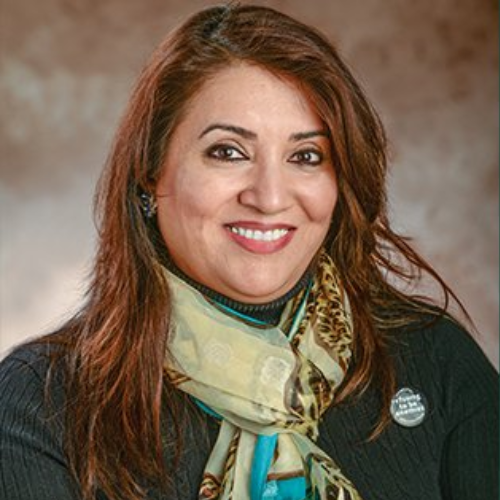 As a pioneer in cultural psychiatry, Farha Abbasi, MD, has dedicated her career to breaking down the deep cultural stigma surrounding mental health care in Muslim communities. A clinical associate professor in the Department of Psychiatry in the colleges of Human Medicine and Osteopathic Medicine at Michigan State University, she trains future physicians while working directly with communities to raise awareness of the cultural, social, and systemic barriers that can affect access to mental health treatment.
July is Minority Mental Health Awareness Month, a time when those who work in the field push for recognition of the gaps in care and how understanding different cultures can help those who work in healthcare successfully treat their patients.
“We ask that people take into account the layered trauma that is being perpetrated by current geopolitical events,” said Abbasi. “Clinicians need to recognize the impact of systemic racism and discrimination on mental health and be able to provide culturally appropriate and religiously sensitive care.”
Abbasi founded the Muslim Mental Health Conference nearly two decades ago during a time when there was inherent fear around the Islam and Muslim community post 9/11.
“There was a push back to starting an annual mental health conference geared towards a specific community and visibly adding Muslim to it,” said Abbasi. “Faith-based integrated behavioral health was a unique concept; its emergence triggered significant skepticism, driven by fears of proselytizing religion from secular clinical institutions and concerns that we were pathologizing our vulnerabilities within the protective factions of the community.”
Abbasi and her colleagues pushed forward with the conference during a time when the societal vendetta and interpersonal Islamophobia transformed a religious minority into a racialized and heavily scrutinized group. She watched as this structural shift led to long-term psychological consequences that she says remain deeply etched in the psyche of Muslim youth.
“The drastic increase in depression, suicidal ideation, addiction, and post-traumatic stress disorder is a palpable consequence we are still struggling with today.”
Other cultural and religious beliefs remain roadblocks for people of Muslim faith when it comes to mental health problems and seeking care. Some may interpret symptoms as a curse or punishment from God or afflictions like the evil eye or jinn possession.
“Some regard seeking psychiatric services as a failure of their faith,” said Abbasi. “This combined with systemic discrimination and a shortage of culturally competent clinicians and therapists, delays timely care. This contributes to health disparities and worse social consequences.”
The 20th anniversary of the Muslim Mental Health Conference is set to be held where it first began at Michigan State University in April 2028. The event continues to expand its global footprint nationally and internationally. Abbasi says her goal is to transform the profession, decolonizing mental health care.
“Unlike conventional Western medicine, which often treats isolated physical symptoms, eastern and indigenous systems view health as a state of balance between the mind, body, spirit,” said Abbasi. “The natural world mental wellness frameworks should be inclusive of historical, culturally rooted healing systems, such as traditional Islamic psychology and Indigenous healing system.”
Dr. Abbasi has received numerous honors for her community service and efforts to promote mental health awareness. Her recognitions include honors from the National Alliance on Mental Illness, the American Psychiatric Foundation's Award for Advancing Minority Mental Health, the Globie Award from the Michigan State University Office for International Students and Scholars, and community service awards from the Association of Physicians of Pakistani Descent of North America and the Pakistan Women’s Association of Michigan. She received the Town Hero Award from Lansing Mayor Virg Bernero, was named a Health Care Hero by Crain’s Detroit Business in 2024, and in March 2023 was one of the top 15 women in the nation honored at Women on the Frontlines: Celebrating Women Faith Leaders, an event hosted by United States Secretary of Health and Human Services Xavier Becerra. She was recently appointed treasurer of the American Psychiatric Association Foundation (APAF).