

College of Human Medicine Program Prepares Future Physicians to Lead Alongside Communities
September 30, 2026
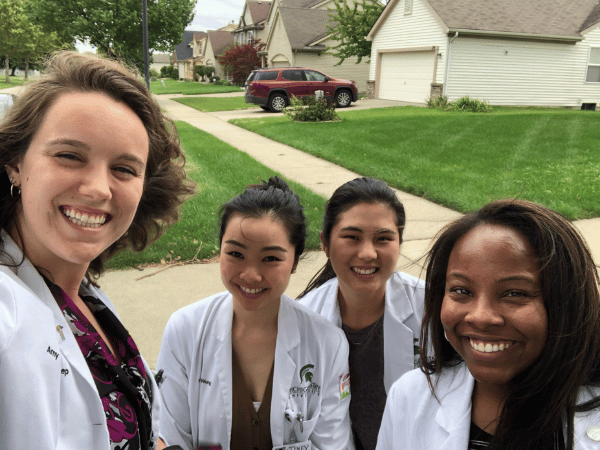 Future physicians at the College of Human Medicine are learning that improving health extends beyond the walls of a clinic or hospital. Through the Leadership in Community and Public Health (LCPH) certificate program, students learn alongside community organizations and underserved populations, gaining firsthand insight into the factors that shape health.
Recently renamed, LCPH brings together two longstanding College of Human Medicine certificate programs: Leadership in Medicine for the Underserved (LMU) and Medical Partners in Public Health (MD-PH), both focused on preparing physicians to care for underserved and vulnerable populations.
The program currently has students across all four years of medical school, including 30 first-year students who joined this year.
"The three words in our name — leadership, community and public health — represent the core pillars of the program," said Gurbaksh Esch, MD, director of the Leadership in Community and Public Health certificate program. "Students learn to lead, they learn from and alongside communities, and they develop the public health knowledge and skills necessary to understand and address the factors that shape health."
A shared mission
For fourth-year medical student Daniel Bishay, the program's mission closely aligns with what drew him to medicine. Growing up in a first-generation immigrant household and later working with people experiencing homelessness and other underserved communities, he saw how social, economic and cultural barriers shape people's experiences with care.
One of his most meaningful experiences in the LCPH program has been working with Wellness Services in Flint, which provides HIV prevention, testing, treatment support, and other resources. Bishay helped assemble and distribute harm-reduction supplies, including naloxone kits and safer-use materials.
“One of my biggest takeaways was when one of the program leaders emphasized the importance of ‘always meet the patient where they are,’ meaning we should work toward our community’s actual needs, not to what we think their needs should be,” Bishay said.
For Bishay, the experience also reinforced the importance of looking beyond an immediate medical concern.
“Prescribing the appropriate medication is important, but it has little impact if the patient can’t afford it, does not have transportation, lacks stable housing, or has previously felt dismissed by the healthcare system,” he said.
In the future, Bishay hopes to practice internal medicine and eventually pursue hematology and oncology.
“I want my patients to feel that I am not only treating their illness, but also listening to them, advocating for them, and helping them navigate a healthcare system that can often feel overwhelming,” he said.
Building relationships through partnership
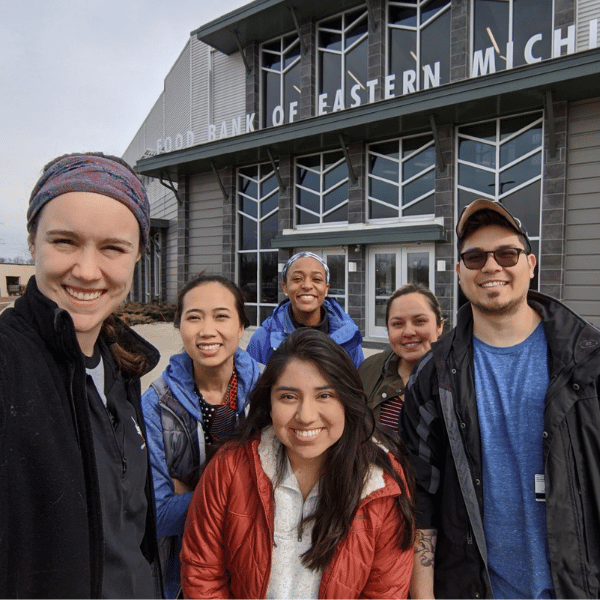 Through the program, students work with a wide range of clinical and nonclinical community partners, such as a free prenatal clinic, a free HIV treatment clinic, organizations serving people in substance use recovery, organizations serving children and families.
"Our community partnerships are truly at the heart of LCPH," Esch said.
"Students are not simply volunteering alongside these organizations. They are learning how to listen, contribute meaningfully, and become true partners in the work already being done in the community."
For Reverend Brad Garrison, president and executive director of Luke Project 52 Clinic of Flint, the partnership gives students firsthand experience with a model of care that looks beyond medical treatment alone.
The free, all-volunteer clinic provides prenatal and postnatal care and education, along with groceries, insurance navigation and a baby store with supplies for families. LCPH students contribute to that work while learning how these supports can help patients stay connected to care.
He hopes students leave with a better understanding of how relationships can influence health outcomes.
“Relationships are the glue that holds our patients in the system, so they receive the care that results in better healthcare outcomes,” Garrison said.
Putting learning into action
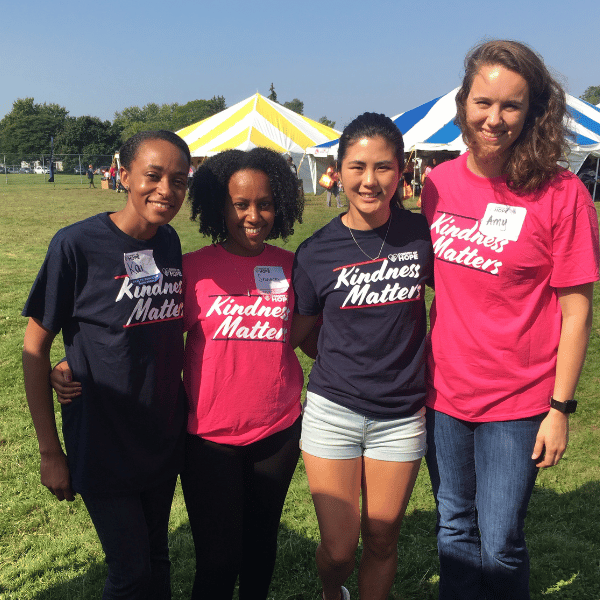 Building on those partnerships, the program is creating opportunities for students to put community-centered learning into action through the new LCPH Community Impact Mini-Grant Program.
The initiative will provide third-year medical students with training, mentorship and mini-grants of up to $1,000 to co-develop projects with Flint-area community partners based on community-identified needs. Projects will be implemented during the 2026–2027 academic year and culminate in an LCPH Community Impact Showcase.
“Ultimately, my hope is that Leadership in Community and Public Health becomes known not simply as a certificate program, but as a model for how medical education can prepare physicians to be compassionate clinicians, thoughtful community partners and confident leaders in improving health,” Esch said.
By: Nadija Kadunic | Media Contact: Emily Linnert