

Laura Freidhoff, MD, Honored with MSU Inclusive Excellence Award
April 27, 2026
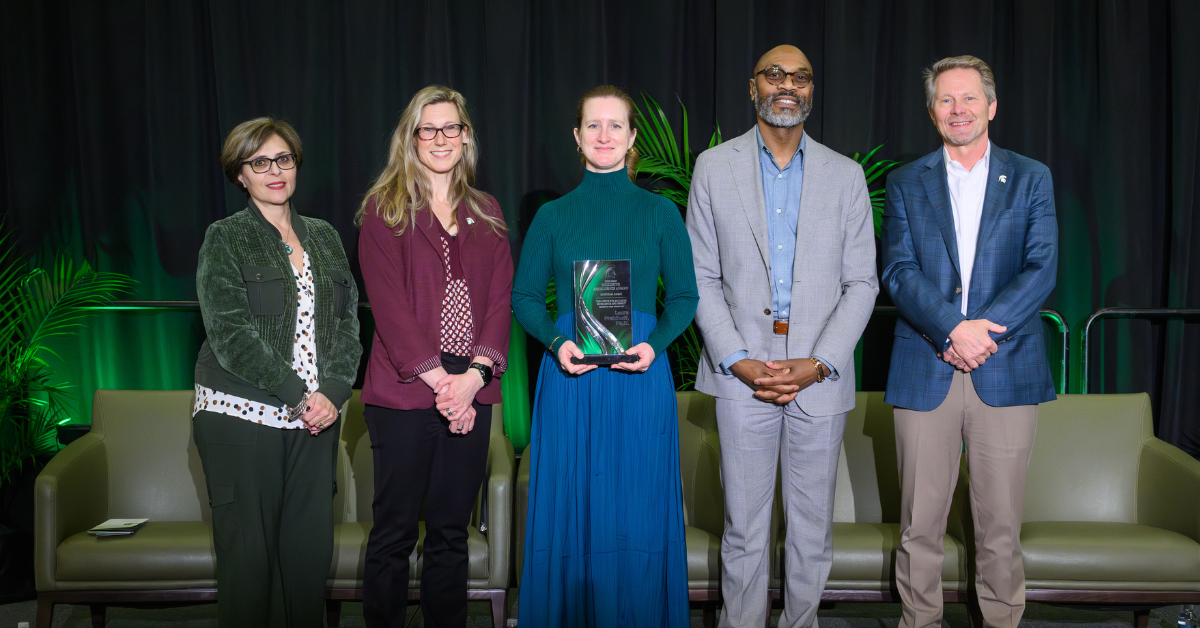
Laura Freidhoff, MD, senior specialist in the Office of Medical Education Research and Development, received the Inclusive Excellence Award from Michigan State University, recognizing her work advancing inclusivity in medical education.
“Laura exemplifies inclusive excellence in action: she has expanded opportunity, improved the learning environment, and helped ensure that compassion, dignity, and belonging are built into the everyday work of medical education in the College of Human Medicine” said Anthony Paganini, PhD, associate professor of Physiology and Biomedical Engineering and Dr. Freidhoff’s nominator for the award.
Freidhoff has led the development of inclusive clinical-care workshops in the simulation curriculum, using applied theatre to help students recognize bias, reduce harm, and improve care for LGBTQIA2S+ patients. The workshop, built on partnerships among the Office of Academic Affairs, the Clinical Simulation Center, the MSU Transforming Theatre Ensemble, and community clinicians has been delivered to hundreds of second-year medical students before they start their clerkships across the state.
Working with Jennifer McCurdy, PhD, and Karen Kelly-Blake, PhD, from the Center for Bioethics and Social Justice, she also secured a Catalyst Innovation Program grant to integrate theatre-based education into the medical ethics curriculum, giving students equitable access to discussions on racism, bias, moral distress, and clinical care for patients with disabilities.
Combining her transdisciplinary training in social science (with a focus on anthropology), biomedical science, clinical science, and arts and humanities, Freidhoff says, “I see our commonalities rather than our differences as the impetus for my work on inclusivity. We all have a body. We all have a story. When we seek medical help, we all want our bodies to feel safe and cared for, our stories heard and respected.”
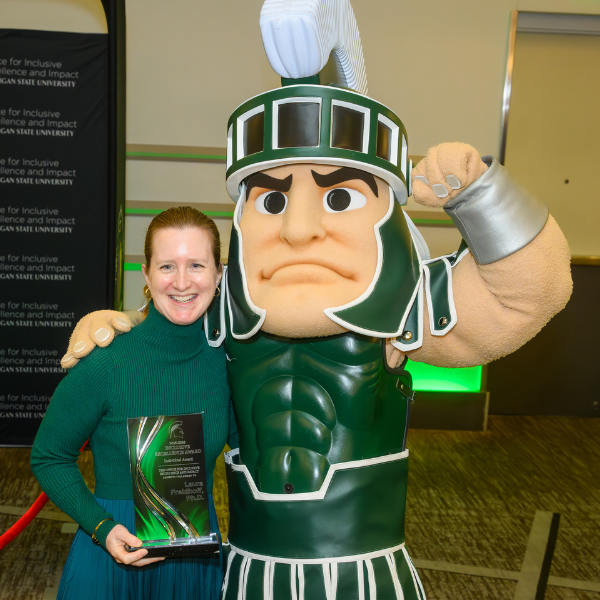 Additionally, her work includes authoring curricular modules addressing inequities in medicine and leading a student-faculty initiative to improve inclusive language across course materials. “Dr. Freidhoff has been very intentional about updating areas of the college curriculum, moving from a condition-first notation (e.g., ‘diabetics’) to a person-first notation (e.g., ‘people with diabetes’), which is a more humanizing approach to medicine and a direct correlate of patient-centered care,” said fourth-year medical student Emmett Leddin.
Beyond curriculum design, Freidhoff has influenced institutional policy and process. She initiated advocacy with academic governance which led to a Course Fee Courtesy policy change approved by the Board of Trustees in 2025. The new Tuition Benefit Program policy expands access and reduces inequities with an estimated more than $900,000 in annual impact for over 2,600 employees and their dependents.
Freidhoff is recognized as a dedicated educator and mentor, strengthening students’ clinical skills while fostering learning and work environments grounded in care, clarity, respect.