

MSU and Corewell Health Recruit Leading Expert to Study Rapid Rise in Childhood Liver Disease
January 21, 2026
Why this matters:
- The rates of Metabolic Dysfunction-Associated Steatotic Liver Disease (MASLD) – a once-rare form of pediatric liver disease – have increased fourfold since the late 1980s.
- MASLD is now the most common form of liver disease in children, yet there are many unanswered questions about what causes it, how to prevent it, and ways to treat it.
- Nationally renowned pediatric hepatologist Miriam Vos will serve in a dual role with Michigan State University College of Human Medicine and Corewell Health to lead NIH-funded research and develop a specialized clinic for children with the disease.
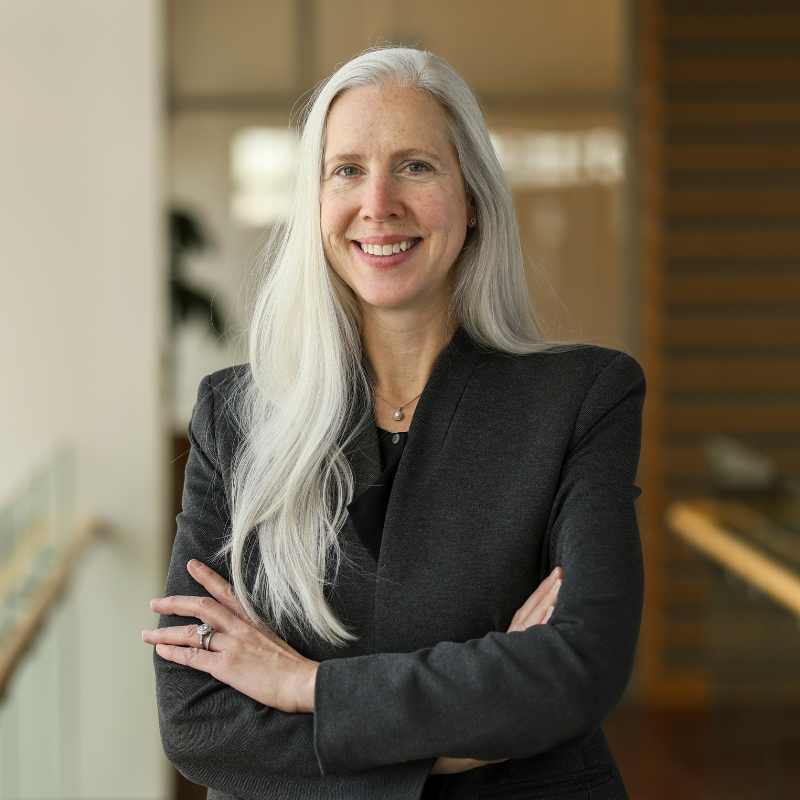 As a pediatric resident, Miriam Vos began studying what was then a rare disease characterized by a buildup of fat in the livers of some children.
Twenty years later, the disease called Metabolic Dysfunction-Associated Steatotic Liver Disease (MASLD) no longer is rare, and Vos, MD, who recently accepted a joint appointment with the College of Human Medicine and Corewell Health in Grand Rapids, Michigan, is a nationally recognized expert on what has become the most common liver disease in children.
In those early years, “we didn’t know anything about it,” Vos said. “We didn’t know who had it or what caused it. Now we know a lot more.”
Between 1988 and 1994, about four percent of children in this country were diagnosed with MASLD. By 2017-2020, the rate had increased to 20 percent.
MASLD can lead to insulin resistance and type II diabetes, inflammation and damage to the liver, and premature death in adulthood.
“When you look across time, you can see there has been a dramatic increase in MASLD since the late 1980s,” Vos said. “I’m trying to solve the clinical problems associated with MASLD, what causes it, how to prevent it, how to make it better, and how to cure it.”
Research has shown that MASLD is caused by both genetic and environmental factors, including obesity and a diet high in sugar. In the past, it often was diagnosed in children after puberty, but more recently it has been showing up in younger children.
Vos is co-principal investigator of a National Institutes of Health funded study of Hispanic children between the ages of 6 and 9. The study includes Hispanic children because rates of MASLD are more common in Hispanic countries.
“What was shocking is that many of these young children already have MASLD,” Vos said.
The rate was particularly high among overweight children. Weight loss can reduce the disease. “Obesity is a major factor,” Vos said, but that alone does not explain the rapid rise in cases.
Her goal is to prevent the disease, improve diagnosis, develop better treatments for those who have it, and cure it.
Over the years, Vos has become a nationally recognized leader in pediatric hepatology and translational research and has authored or co-authored more than 140 peer reviewed publications. She is senior author of an upcoming study in Redox Biology showing that fructose sugar consumption increased “oxidated stress,” leading to inflammation and liver damage in children. She is also a co-author of a paper to be published soon in Nature Communications that identifies three types of MASLD. Knowing which type a child has can help doctors prescribe a precise treatment, she said.
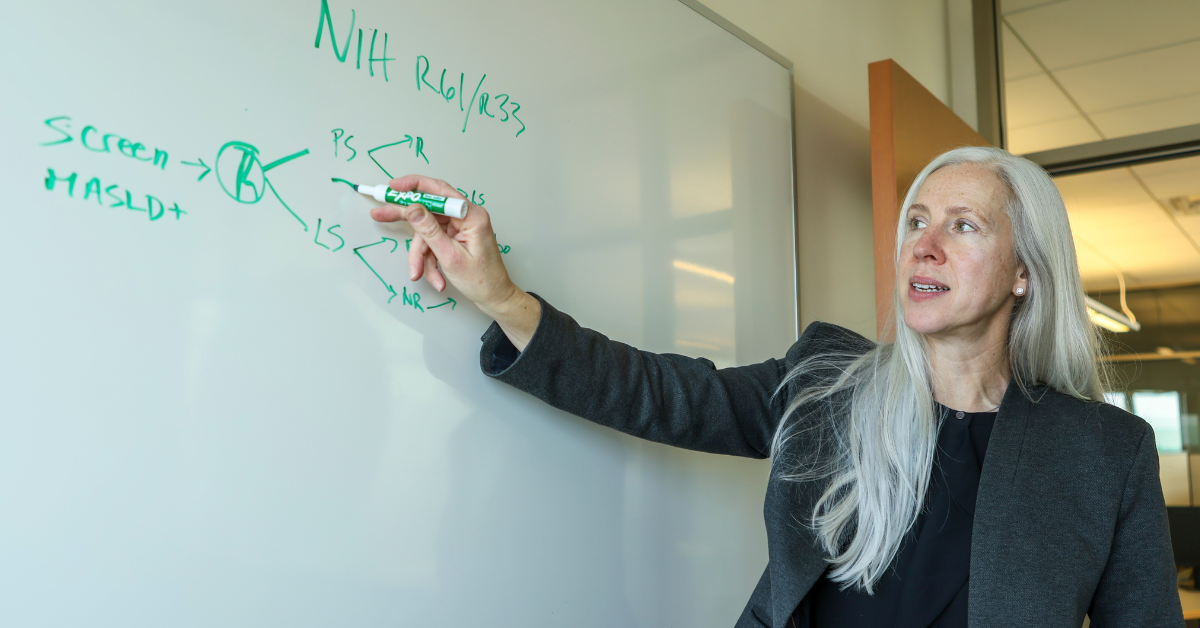
Vos conducted much of her research at Emory University School of Medicine in Atlanta, where she was a professor of pediatrics and vice chair of clinical research.
In August, she was named professor with tenure and associate chair for translational research in the College of Human Medicine’s Department of Pediatrics and Human Development and director of research at Corewell Health Helen DeVos Children’s Hospital.
For Vos, the joint appointment is something of a homecoming. She earned a bachelor’s degree with a philosophy major and pre-med track from Calvin College (now University) before receiving her medical degree and a Master of Science in Public Health degree from the University of Louisville School of Medicine.
“I feel like I’m returning to give back,” she said. “Grand Rapids is where my path to medicine began.”
In her new position, she will mentor junior physicians and researchers while building a dedicated pediatric hepatology service to advance the care for children with complex liver diseases at Helen DeVos Children’s Hospital.
“I see a lot of opportunity here to take the collaboration and growth that’s happening on the Medical Mile in Grand Rapids and build programs to transform child health,” Vos said, noting in particular “the size and excellence of Corewell Health as a clinical institution and MSU as a research institution.”
By Pat Shellenbarger
Media Contact | Emily Linnert