

Learning Medicine by Living It
January 22, 2026
Inside the Intergenerational Living Program
Living with her grandfather during his journey with dementia is an experience that Christine (Chris) Skovira will always hold dear. Not only was she able to spend precious time with her beloved family member, but she was also inspired to improve care for others along the same journey. As a first-year student at Michigan State University College of Human Medicine, she began volunteering in a skilled nursing facility serving others with dementia through the Music for Dementia program.
“Medical school is rewarding but often isolating,” said Skovira. “I heard similar feelings of isolation from older adults. I realized that lessons I had learned from living with my loved one and from volunteering were helping me on my medical school exams.”
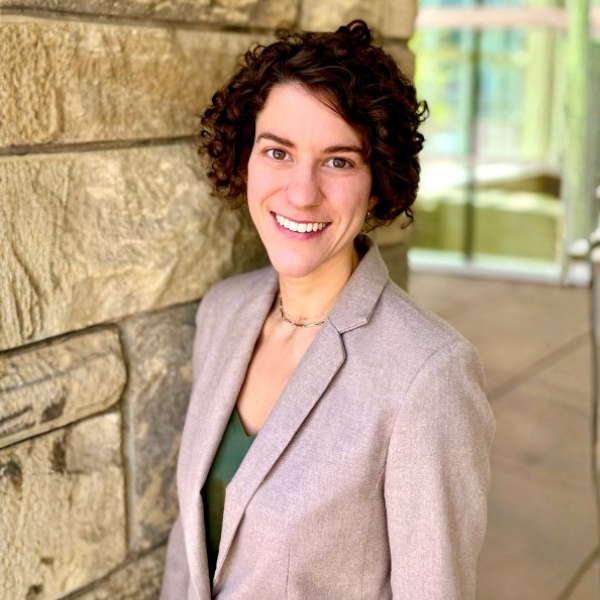 Skovira, now a fourth-year medical student who worked on designing community health and health equity programs for ten years prior to medical school, went to work creating a proposal to present to college leadership. Alongside Irving E. Vega, PhD, an MSU Red Cedar Distinguished Associate Professor who studies dementia, the two compiled details outlining a program to improve the well-being of older adults with dementia while shaping the next generation of care providers. It became the Intergenerational Living Program, a first-of-its-kind program and partnership with the Dementia Institute at Holland Home.
The program includes a medical student committing to socializing with senior residents, investing in a research and quality improvement project of their choosing, while living among the people they serve in a senior living facility.
“This is part of the mission of the College of Human Medicine, which is a community-based medical school training the next generation of physicians to work in communities with empathy and humility,” said Vega. “That aspect is something that is enhanced here by having a medical student living alongside people they might take care of in the future, and work with them to resolve their issues with illnesses and physical challenges that affect them. This experience moves our learning beyond the classroom and into a real-world setting.”
It was through his dementia research and community work that Vega learned the Dementia Institute at Holland Home had been brainstorming new ideas to engage college and graduate students including ways to build an intergenerational housing program. Members of the College of Human Medicine Intergenerational Living Program Student Board and leaders at the Dementia Institute were excited to find the other already working on a similar concept. Along with help from Skovira and her fellow board members, Mary Shepard, John Jakubowski, and Rachel Armstrong, details were hammered out and a partnership including the critical element of housing accommodation for a student within Holland Home Raybrook was established.

“I applaud and commend Michigan State University. They've been a phenomenal partner. The whole team at the College of Human Medicine has been great to work with,” said Curt Gritters, director of the Dementia Institute. “It took a couple of years’ worth of research and development to make sure that this program would be successful.”
Members of the Intergenerational Living Program Student Board were challenged with getting the word out about the program to prospective students, explaining how the program would work and identifying candidates for the pilot year.
As a newly accepted first-year medical student from the Upper Peninsula, Kaylin Burton was made aware of the program through a medical student group chat.
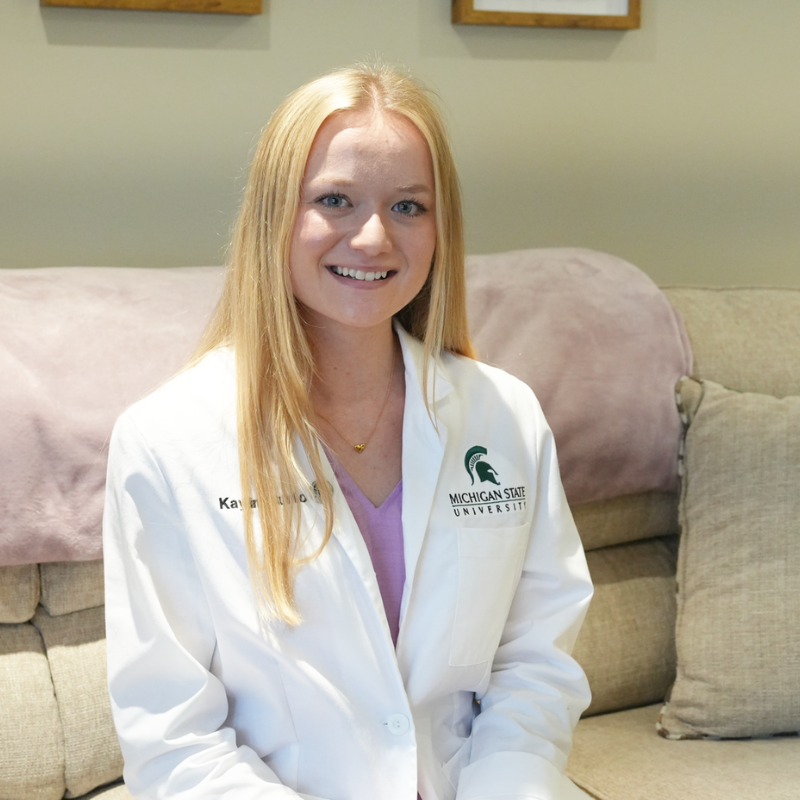 “I saw it and I thought immediately this is something I'm interested in,” said Burton. “Coming into medical school, I worked as a nurse aide at assistant living, and I've grown up with my grandparents. I thought that I would be interested in doing geriatric and primary care, and this would be really a great opportunity to reinforce that idea. It piqued my interest right away.”
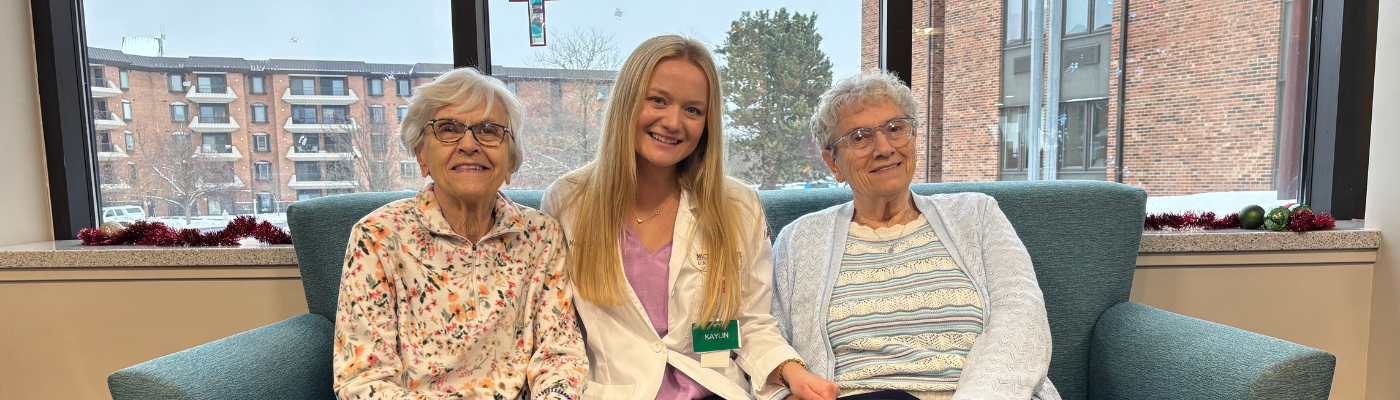
Burton was the first student chosen for the program and now at age 23 lives in an apartment at Holland Home Raybrook alongside senior citizens and just steps from the dementia care unit where she volunteers.
“They take care of me, and they ask about how school is going. I feel like I'm definitely part of the community here,” said Burton. “My neighbors and the people that I live with here are so busy with all their activities going on that sometimes it feels like I'm in my room studying and they're having a good time at their event, and I wish I could join more. It's a lot of fun.”
“As students, we get so much out of interacting with older adults. And we are learning these invaluable lessons that you can only learn from a person,” said Skovira. “You can learn more life lessons and clinical pearls than you get from a textbook. You need the textbook learning to make these things make sense, but there's so much more joy and you're never going to forget something you learn from a person.”
Skovira, Vega, and the rest of the Intergenerational Living Program Student Board hope this can become a model nationally for medical education and community engagement, inspiring more medical students to work with and learn how to care for older adults. The student board is actively recruiting other medical students who are interested in supporting the program, conducting research, or volunteering, regardless of their specialty of interest. They point out that all medical students will care for older adults at some point in their training or career. They believe this unique experience is essential for future doctors regardless of their specialty of interest.
“More and more we want to integrate what is done in academia to the community,” said Vega. “More than ever, we are called to step beyond our labs and academic halls and work directly with the communities whose health and well‑being we strive to improve. When we share our knowledge openly, humbly, and in partnership with the public, we help turn evidence into meaningful action. By doing this, we narrow the gap between scientific discovery and community health impact, creating conditions where everyone has the opportunity to thrive.”
Media Contact | Emily Linnert

Related News 
Advancing Dementia education and care through innovative intergenerational living initative